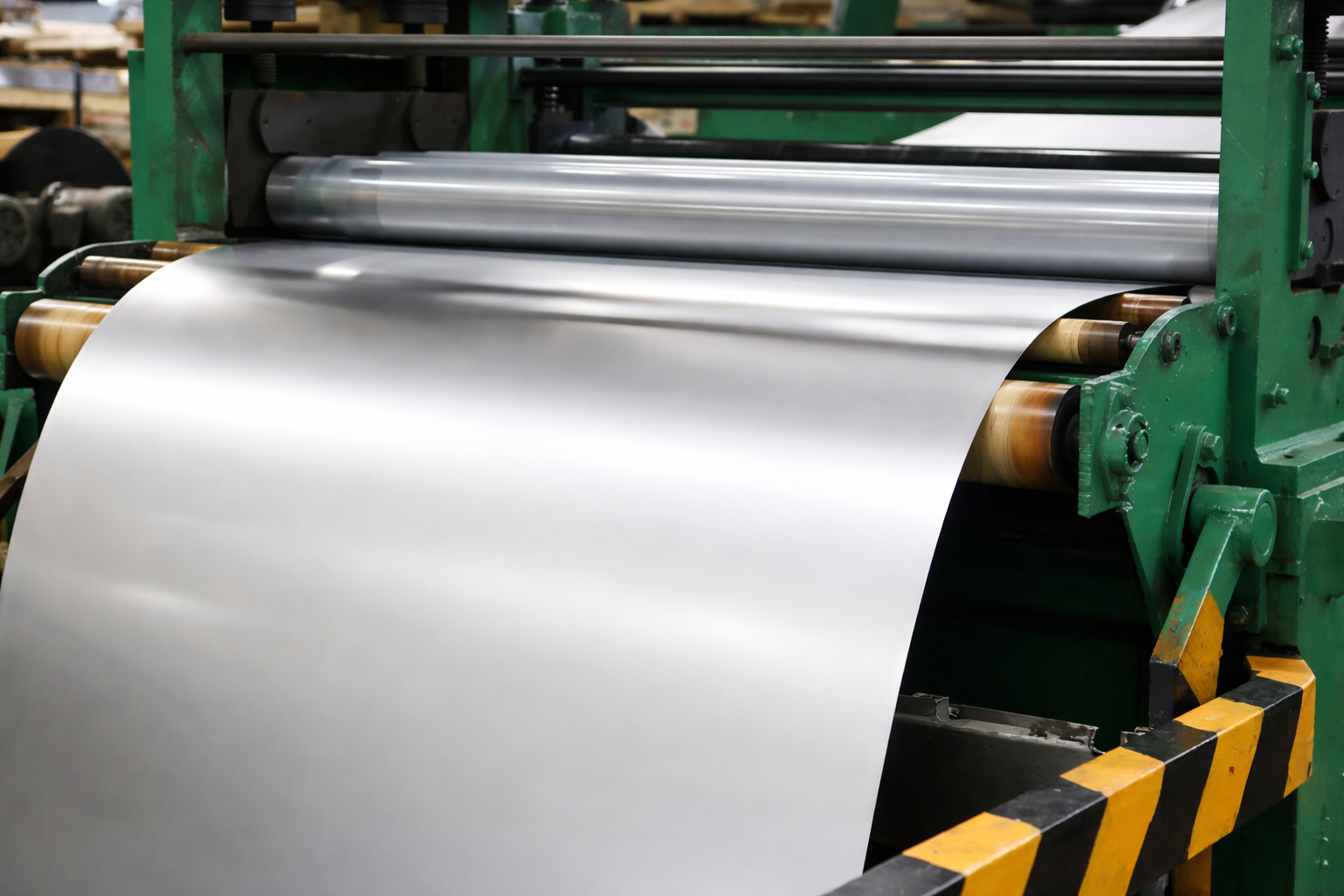
At Auglaize Erie Machine, we work with steel every day. The choice between hot rolled and cold rolled steel is a foundational decision that shapes the function, cost and performance of a part. If you’ve ever wondered what truly separates these two common materials, you are in the right place. Let’s break down the details.
Demystifying the Terminology
First, let’s clarify some terms. You might hear “hot formed” and “hot rolled” used in conversation. While hot rolling is the most common method, falling under the larger umbrella of hot forming, for the sake of this discussion, we’ll treat them as describing the same basic material. The same goes for “cold formed” and “cold rolled.” Both refer to steel shaped at or near room temperature, though “cold rolled” often specifies the process for attaining flat sheets with very close dimensional control.
The Hot Rolled Process
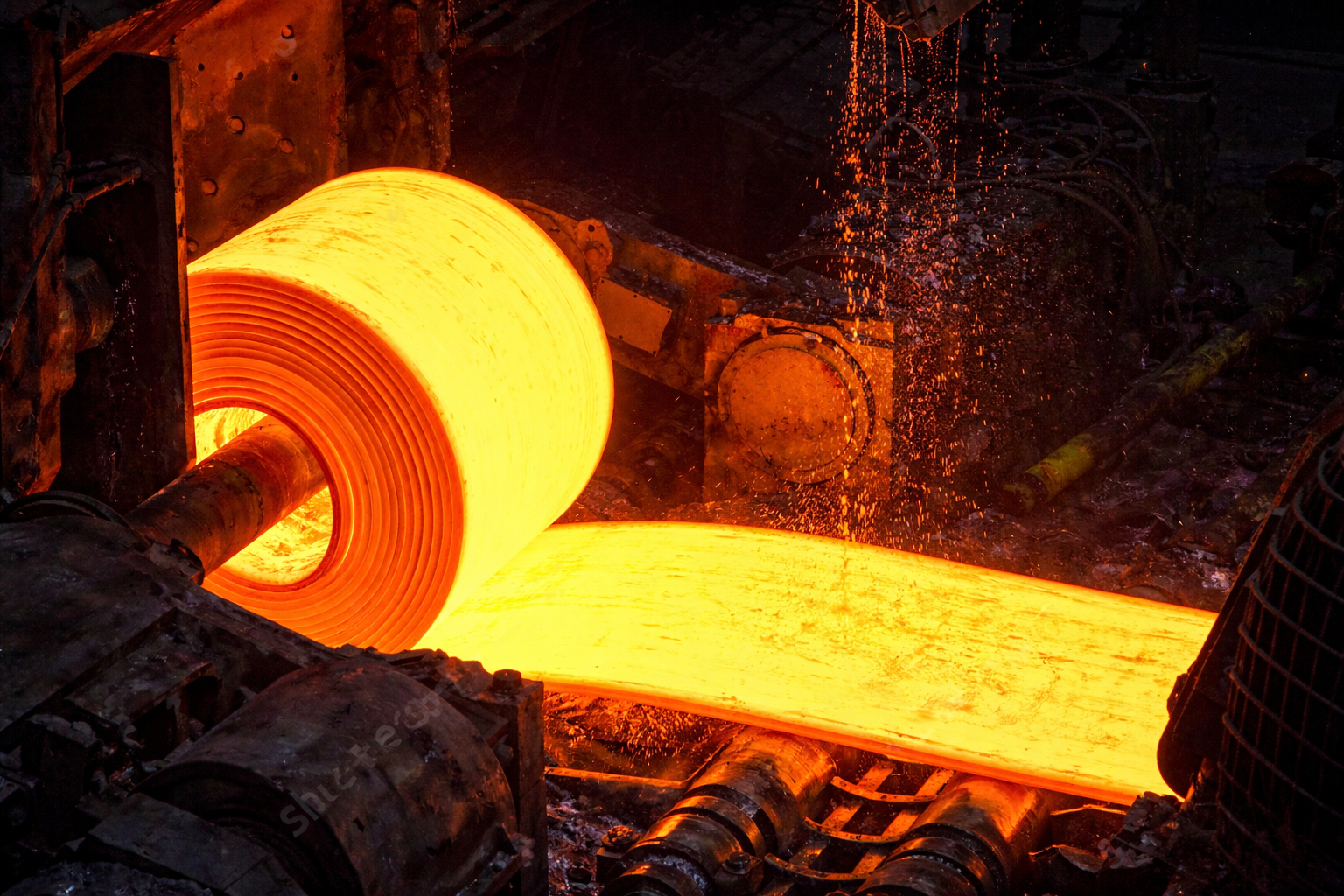
The main difference is the temperature during the primary shaping process. Hot rolled steel is processed at extremely high temperatures, typically above 1700°F. At this heat, steel becomes very malleable, allowing it to be pressed and rolled into large, heavy shapes like I-beams, channels and plates with relative ease. This high-temperature process is efficient and cost-effective, but it leaves a signature surface. A slightly rough, scaled finish often with rounded edges. The dimensions of hot rolled steel are less exact, with wider tolerances, making it a go-to for applications where absolute surface finish and tight size limits are not the main concern. Think structural frames, railroad tracks and construction equipment components.
The Cold Rolled Process
In contrast, cold rolled steel starts as hot rolled steel that is then further processed at room temperature. During this secondary cold-working stage, the steel is passed through rollers to achieve a desired thickness and profile. This room-temperature process “work hardens” the steel to increase its yield strength and hardness. The surface that results is notably smooth and clean, often with a slight sheen and the edges are sharp and well-defined. The dimensional accuracy is far greater, with tolerances measured in thousandths of an inch. You’ll find cold rolled steel in products where appearance, exact fit and added strength are needed, such as automotive panels, appliance housings, furniture frames and precision mechanical components.
Making the Material Choice
So, how do you choose? It comes down to the job’s requirements.
Choose hot rolled steel when: Your project involves large structural elements, the final finish will be painted or coated anyway, tight dimensional limits are not necessary and budget is a significant factor. Its ductility can also be an asset for certain forming operations.
Choose cold rolled steel when: You need a smooth and ready-to-use surface finish, your design demands exact and consistent dimensions, the increased strength from work hardening provides a benefit and you are machining parts where predictable material behavior matters.
The Auglaize Erie Machine Perspective
Each material has its place in a well-stocked shop. At Auglaize Erie Machine, our experience with both types of steel informs every project. We understand how hot rolled steel behaves under a cutter and how cold rolled steel holds a thread. This knowledge guides our recommendations and our machining approach to help you select the right material from the start to avoid unnecessary cost or compromise. The right steel choice is the first step to a part that performs as intended and that’s a step we take seriously.