For years, the sign of a great machining shop was the ability to hold tight tolerances. Skilled machinists – working with capable machines – created parts that met specifications. The goal was a perfect part at the end of the process. Today, that mindset has been turned upside down. The pursuit of accuracy is no longer just about the destination. It’s also about the finished component. It’s about the entire journey of production. In 2026, this relentless drive for higher fidelity is reshaping the industry, powered not by a single machine, but by a connected ecosystem of smarter systems, watchful sensors, and intelligent inspection tools.
The change is being driven by a simple, powerful shift in thinking. We are no longer just machining parts; we are building verifiable, digital records of their creation with every pass of the tool. This approach to production is transforming how parts are made, from the first CAD model to the final inspection report.
The Foundation
Smarter Machines & Smarter Data
Modern precision machining is built on the easy integration of digital systems with physical production, a core concept of Industry 4.0. This integration allows data to be collected and analyzed throughout the machining process, leading to better control and outcomes.
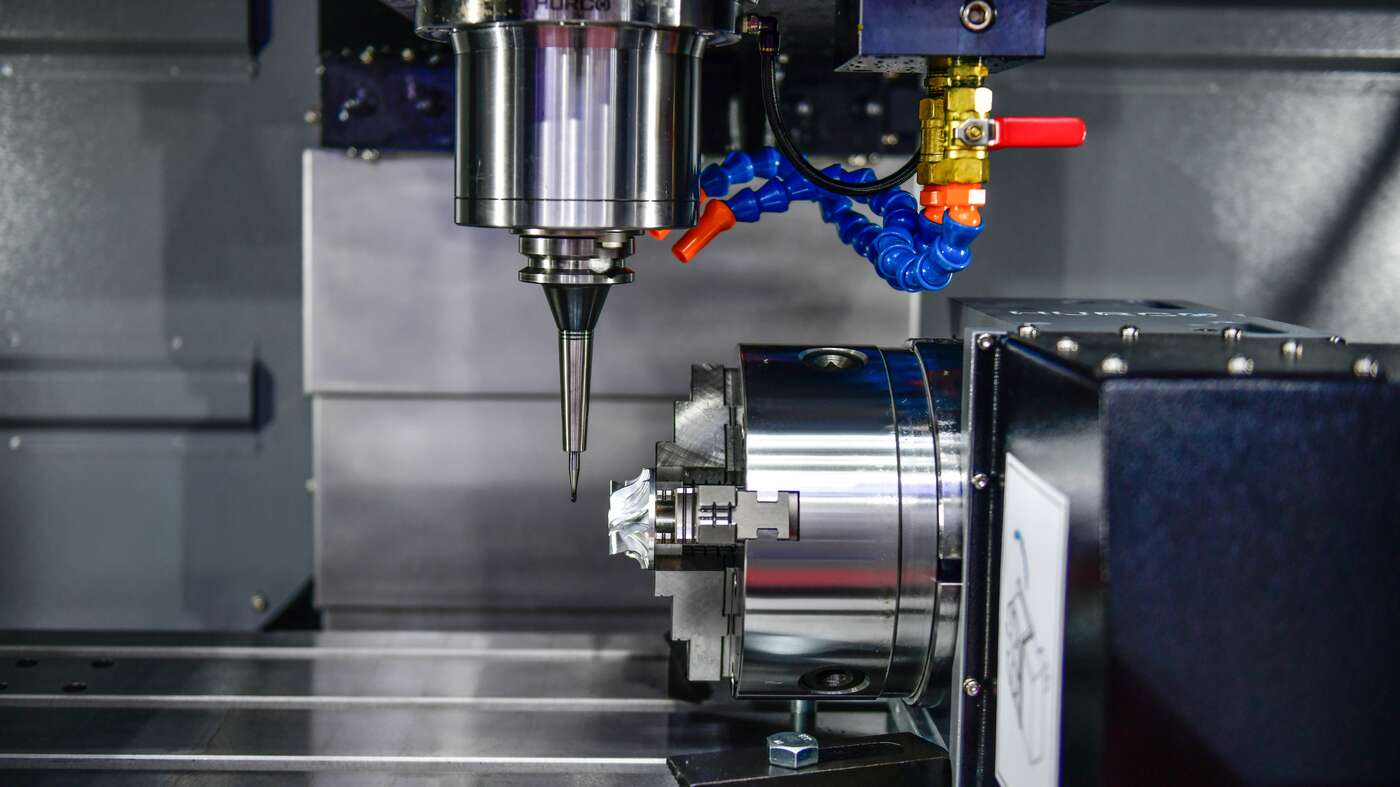
The heart of this evolution remains the CNC machine, but its capabilities are expanding dramatically. While 3-axis machining is a mainstay for simpler parts, the complexity of components in aerospace, medical and automotive fields is pushing 5-axis machining from a specialty to a necessity. For a company like Auglaize Erie Machine, investing in 5-axis capability is about more than making complex shapes; it is about consolidating operations. A part that once required multiple fixtures and setups across several machines can now be completed in a single clamping. Each time a part is moved and re-fixtured, a chance for error is introduced. 5-axis machining eliminates those steps, inherently improving the consistency and fidelity of the final product by ensuring every feature is machined from a single, perfect datum.
These machines are becoming more than just executors of code; they are data hubs. Integrated sensors monitor spindle load, vibration, thermal growth and axis positioning in real time. This continuous stream of data is no longer just for after-the-fact troubleshooting. It is fed into systems that create a “digital twin.” A virtual, real-time simulation of the machining process. The machinists at Auglaize Erie use this twin to simulate and validate toolpaths before any metal is cut to identify potential collisions or vibrations that could compromise a part’s surface finish or dimensional stability.
The Watchful Eye
Tool Monitoring & In-Process Insight
Perhaps the most significant leap forward in the quest for accuracy is the move from post-process verification to in-process assurance. The old method was to machine a part, take it off the machine, and then check it. If it was wrong, the material (and the time) was already wasted.
Today’s systems catch errors as they happen. This is achieved through two key technologies:
- In-Process Probing: A touch probe installed in the machine’s spindle can automatically measure key part features between machining operations. Think of it as the machine ‘checking its own work.’ If a bore is machined slightly undersized, the probe detects it. It then calculates the offset and instructs the tool to take another pass with a corrected path. All of this is done before the part is ever unclamped. This self-correction compensates for predictable variables like tool pressure or minor thermal drift, dramatically reducing scrap and rework.
- Tool Condition Monitoring: The best machining plan is useless if the tool fails. That’s why we now use sensors to watch the tool the whole time. Laser sensors check for tool wear, and sound sensors listen for a break. If a problem is spotted, the system can stop the machine, switch the tool, or slow things down to save the part.
This shift transforms the machine from a blind producer into an intelligent partner in quality, making the entire production cycle more predictable and less wasteful.
The Final Judge
A New Generation of Quality Inspection
Even with the most advanced in-process controls, the final verification is still required. Here, too, the focus is on speed, integration, and deeper insight. The days of a part waiting in a queue for a manual check on a coordinate measuring machine (CMM) are fading. Modern quality labs are being integrated directly into the production flow.
- Automated Metrology: Robotic arms handle parts for measurement systems, allowing inspection to run on its own overnight. This setup makes the process faster and more consistent. It also automatically sorts out bad parts, so good production can continue while problems get flagged for a team to look at.
- Beyond Dimensions: Some parts, like those made with 3D printing, have passages inside that you can’t see. Automated CT scanning acts like an X-ray for parts. It creates a complete 3D picture of the inside and outside without breaking the part open. This lets you check things like wall thickness and confirm that internal channels are sealed properly.
The result is a comprehensive digital fingerprint for every single part produced: not just a list of dimensions, but a complete record of its form, surface and internal structure, all tied back to the serial number and the exact machining conditions that created it.
The Synergy in Action
A Practical Impact
The true power of these technologies isn’t in their isolated use, but in their synergy. Let us consider the journey of a high-value aerospace bracket:
- Its production begins on a 5-axis machine, which completes 95% of its complex geometry in one setup.
- An in-process probe checks the mating surfaces mid-cycle and makes micro-adjustments.
- A tool monitoring system tracks the end mill creating a delicate pocket, slowing the feed rate slightly as the tool shows signs of wear.
- Once finished, our equipment precisely measures the part for a final verification that takes minutes – not hours.
- All data – from the toolpath and probe corrections to the final inspection report – is linked in a single digital record.
This process doesn’t just make a good part. It builds a defensible, data-backed guarantee of its conformity.
The Human Element in a Digital Age
With so much automation, one might wonder about the role of the machinist and quality technician. Their role is not diminished; it is elevated. They are no longer primarily manual operators or inspectors. They are now system managers, data analysts and problem-solvers. Their expertise is focused on programming these sophisticated systems, interpreting the wealth of data they produce, and making strategic decisions to improve the process further. The machinist’s deep understanding of material behavior, tooling, and machine dynamics is what allows them to set up these automated systems for success and intervene with expert judgment when the data indicates a deeper issue.
Looking Ahead
The Integrated Factory Floor
As we move through 2026 and beyond, the trajectory is clear. The lines between machining, tool management and inspection will continue to blur. We are moving toward a fully integrated factory floor where data flows as freely as coolant. The machine that makes the part will be in constant dialogue with the system that measures it, creating a closed loop of continuous improvement. Predictive analytics will use historical machining and inspection data to forecast tool life or machine maintenance needs before they impact quality.
For forward-thinking manufacturers, investing in this ecosystem – in 5-axis flexibility, in-process monitoring and automated inspection – is no longer just a capital expense. It is an investment in certainty. When making a profit is hard and part specifications are extremely strict, the biggest edge you can have is the absolute certainty that what you deliver matches the original blueprint perfectly. The goal for machining shops isn’t just to make parts with extreme accuracy anymore. It’s to create a complete, provable record that proves the quality of each and every piece. And that story begins long before the first chip is ever made.