
You have an image of a part in your head. Maybe you sketched it on a napkin over lunch. Perhaps you spent the weekend modeling it on your computer, or you just have a rough idea scribbled in a notebook. The next step is getting it made, and that means handing it over to a machine shop.
Here is what many people miss: getting that part made is a partnership between you and the shop floor. You are not just dropping off work and waiting for magic to happen. The more prepared you are on your end, the smoother the process goes and the fewer headaches you will have when you hand the job over to a CNC machine shop.
Let’s walk through exactly what you need to have ready before you hit send on that email.
A File That Actually Works
Shops do not work from fuzzy iPhone photos. They cannot machine a part from a verbal description or a scanned napkin drawing. They need a proper digital file that their machines can read.
The industry standard is a 3D model, typically a .STEP or .IGES file. These file formats contain the complete geometric data of your part. When you send a STEP file, the programmer can load it directly into their CAM software and start planning toolpaths immediately. They can rotate the model, zoom into tight corners and see exactly what they are working with.
Can you send a 2D drawing instead? Sometimes. But a solid model gives the programmer the full picture without guessing. With just a drawing, they have to visualize the three-dimensional shape in their head. With a model, they can see it. Stop sending PDF screenshots and start sending real files.
The Drawing (Even with a 3D Model)
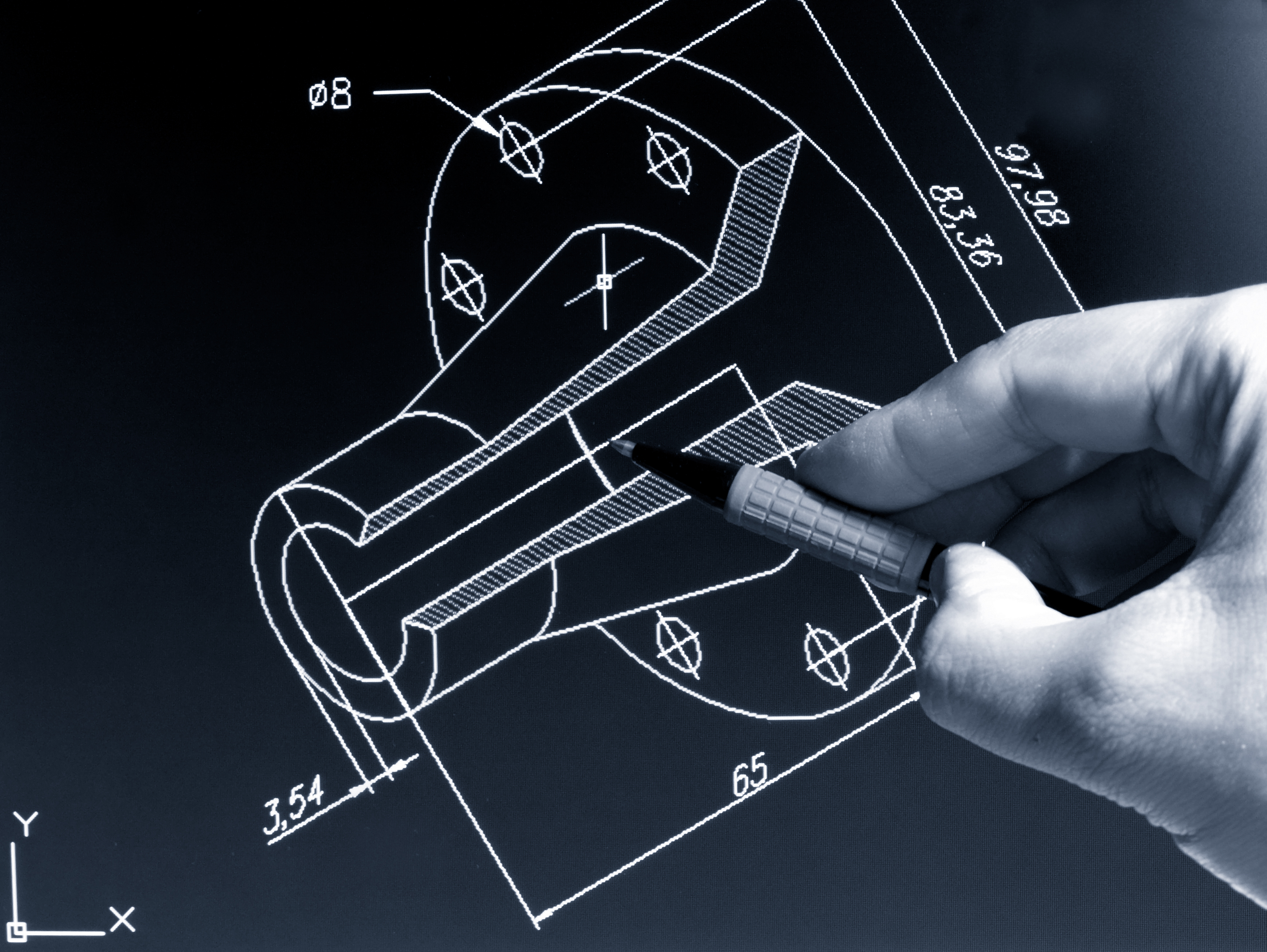
Here is where things get interesting. A 3D model shows the shape of your part, but it does not always show your intent. That is why you still need a 2D technical drawing with dimensions.
The drawing tells the machinist what matters most. Not every single hole on your part needs to be held to +/- 0.0005 inches. That kind of tolerance drives costs up and cycle times out. Your drawing shows which features are important and which ones can breathe a little.
You also need to call out surface finish. Does that flat surface need to seal against a gasket? Or can it look like it came straight off the end mill? Tell them.
Material callouts trip up a lot of people. Writing “aluminum” on a print is asking for trouble. 6061-T6 machines are different from 7075. They have different properties and different costs. Be specific.
And please, for the love of all things machined, specify thread depth. A tapped hole that goes through the part is obvious. A blind hole with threads needs a depth callout. Do not make them guess.
Material Choice and Supply
You have two paths here. You can let the shop buy the material, or you can supply your own stock.
Here is what shops wish you knew: they have relationships with suppliers. They buy enough volume that their pricing on raw stock is often better than what you will find online or at a local metal supplier. Let them handle it. It is usually cheaper and easier for everyone.
If you are supplying your own material, especially for aerospace or medical work, that stock needs traceable certification. The shop will need to verify the material matches your print. No cert, no cut. Do not show up with a rusty chunk of mystery metal and expect them to run it.
Quantity and Timeline
How many parts do you actually need? This changes everything about how the job runs.
One prototype part? That might run on a manual machine or a simple 3-axis setup with the machinist standing right there tweaking feeds and speeds. Ten thousand parts? That justifies building custom fixtures and fixturing plates. That might mean running on a 5-axis machine with lights-out automation.
Be honest about your delivery expectations. If you need parts rushed, say so up front. Shops can often shuffle schedules or run overtime to get you what you need, but they cannot read your mind. Tell them when you need it and ask if they can hit that date.
The Fine Print (POs and Paperwork)
Before any machine starts cutting chips, the administrative side needs handling. This is the boring stuff, but skipping it causes real problems.
A purchase order authorizes the work. It should reference the revision level of your print. If you send a print marked “Rev A” but the PO references an old quote with “Rev B,” you are setting yourself up for confusion. Keep it straight.
Many shops also require inspection reports or certificates of conformance, especially for regulated industries. Ask what documentation they need to ship with the parts. Some shops will not release product without the paperwork signed off, so get that clarified upfront.
Sending a CNC machine shop a complete package (the right file, a clear drawing, specific material notes and proper paperwork) sets the job up for success. It saves time, eliminates the back-and-forth emails asking for clarification and ensures the parts you get back are the parts you actually wanted. Do the prep work now, or deal with the mess later. Your choice.
The Cold Rolled Process
In contrast, cold rolled steel starts as hot rolled steel that is then further processed at room temperature. During this secondary cold-working stage, the steel is passed through rollers to achieve a desired thickness and profile. This room-temperature process “work hardens” the steel to increase its yield strength and hardness. The surface that results is notably smooth and clean, often with a slight sheen and the edges are sharp and well-defined. The dimensional accuracy is far greater, with tolerances measured in thousandths of an inch. You’ll find cold rolled steel in products where appearance, exact fit and added strength are needed, such as automotive panels, appliance housings, furniture frames and precision mechanical components.
Making the Material Choice
So, how do you choose? It comes down to the job’s requirements.
Choose hot rolled steel when: Your project involves large structural elements, the final finish will be painted or coated anyway, tight dimensional limits are not necessary and budget is a significant factor. Its ductility can also be an asset for certain forming operations.
Choose cold rolled steel when: You need a smooth and ready-to-use surface finish, your design demands exact and consistent dimensions, the increased strength from work hardening provides a benefit and you are machining parts where predictable material behavior matters.
The Auglaize Erie Machine Perspective
Each material has its place in a well-stocked shop. At Auglaize Erie Machine, our experience with both types of steel informs every project. We understand how hot rolled steel behaves under a cutter and how cold rolled steel holds a thread. This knowledge guides our recommendations and our machining approach to help you select the right material from the start to avoid unnecessary cost or compromise. The right steel choice is the first step to a part that performs as intended and that’s a step we take seriously.